
Guide
Medjool Buying Guide: Is Jumbo Worth It? (5 Packs Tested)
I bought 5 Medjool packs and weighed the pits. The 30-second quality check, fair prices per ounce, and why Jumbo costs 60% more.
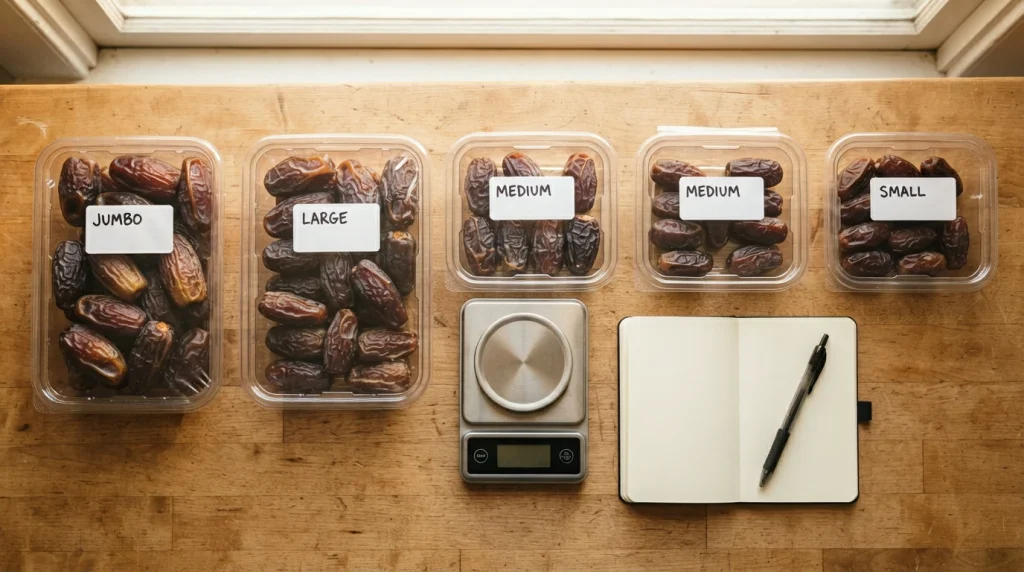
The Jumbo bin was $11.99 a pound. The Large bin beside it — same farm, same packer, same shelf — was $7.99. I stood in my grocery store doing phone-calculator math like a responsible adult, bought both, and over the following two weeks bought three more Medjool packs from different stores to settle the question properly: is Jumbo worth double the price per ounce?
Short version: no. Long version below, with receipts.
The five-pack experiment
Late 2025, five packs, one kitchen table, one notebook. Same tasting protocol for each: eaten plain at room temp, then bent in half to check flexibility, then cut open to check the flesh around the pit.
| Pack | Grade | Price | $/oz | Texture (1–10) | Notes |
|---|---|---|---|---|---|
| Natural Delights (Kroger) | Large | $7.49 / 1 lb | $0.47 | 8 | Glossy, springy, the benchmark |
| Trader Joe’s Organic | Large/Med mix | $5.49 / 12 oz | $0.46 | 7 | Slightly dry at the tips |
| 365 (Whole Foods) | Medium | $6.99 / 12 oz | $0.58 | 7 | Consistent, small-ish |
| Natural Delights (Costco) | Large | $12.99 / 2 lb | $0.41 | 8 | Cheapest per ounce, period |
| Middle East market, bulk | Jumbo | $11.99 / 1 lb | $0.75 | 9 | Genuinely the best one |
Two findings I didn’t expect:
- The Jumbo tax is real. $0.75/oz vs $0.47/oz is a 60% premium for size alone. The Jumbo fruit tasted better — plumper, wetter — but when I chopped both into a batch of energy balls a week later, nobody could tell which batch came from which bin.
- Texture tracked freshness, not price. The TJ’s pack at $0.46 ate better than the 365 pack at $0.58. What predicted quality wasn’t the store or the sticker — it was how recently the pack had been filled and shipped. Which leads to the part of this guide that will actually save you money:
How to judge quality in 30 seconds
After handling five packs in a week, here’s the checklist I now run on every bag before it goes in the cart:
- Skin: slight sheen is good — that’s natural sugars migrating to the surface. Fine wrinkles are normal. Cracked, flaky, or split skin means the fruit lost moisture somewhere in its journey; skip it.
- Flex test: press a date through the bag. It should give like your earlobe and spring back. If it feels like your knuckle, it’s old stock.
- The white dust: not mold. Sugar crystals, completely harmless. Full explanation and the smell test for actual spoilage are in our date storage guide.
- Turnover: flip the bag and find the pack date if there is one. A “medium” grade from three weeks ago beats a “jumbo” grade from eight months ago every time. My market’s bulk Jumbos moved fast — that’s why they were good.
Size grades, decoded
First, the boring-but-important part: USDA grade standards for dates exist and are about defects, maturity, and color, not size. The size names you see on packages — Jumbo, Large, Medium, Small — are industry convention, and the counts shift a bit between packers. Roughly, per pound:
| Grade | Approx. count per lb | What it’s for |
|---|---|---|
| Jumbo | ~15 or fewer | Display trays, impressing people |
| Large | ~16–20 | Everything. This is the sweet spot. |
| Medium | ~21–25 | Snacking, stuffing, cheaper per oz |
| Small | 26+ | Chopping, blending, paste |
One size note: a Jumbo Medjool runs 30+ grams — bigger than a golf ball. When a recipe says “12 dates,” the author almost certainly means Large or Medium. Measure by weight, not count, or your “12 dates” adds 100 extra grams of sugar.
Pitted vs. unpitted: I weighed the pits
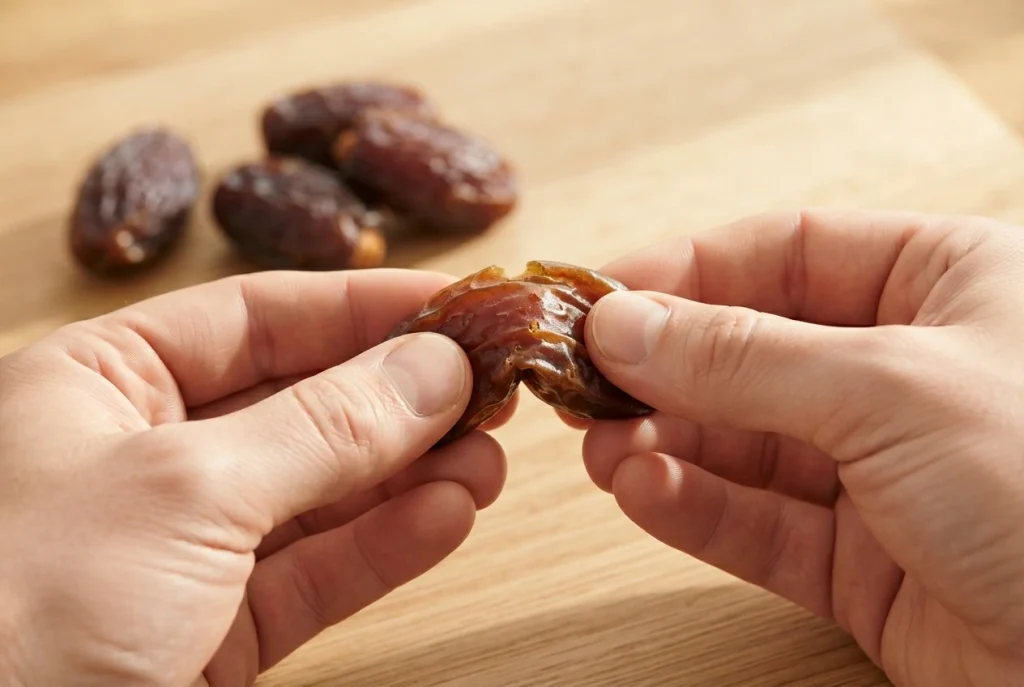
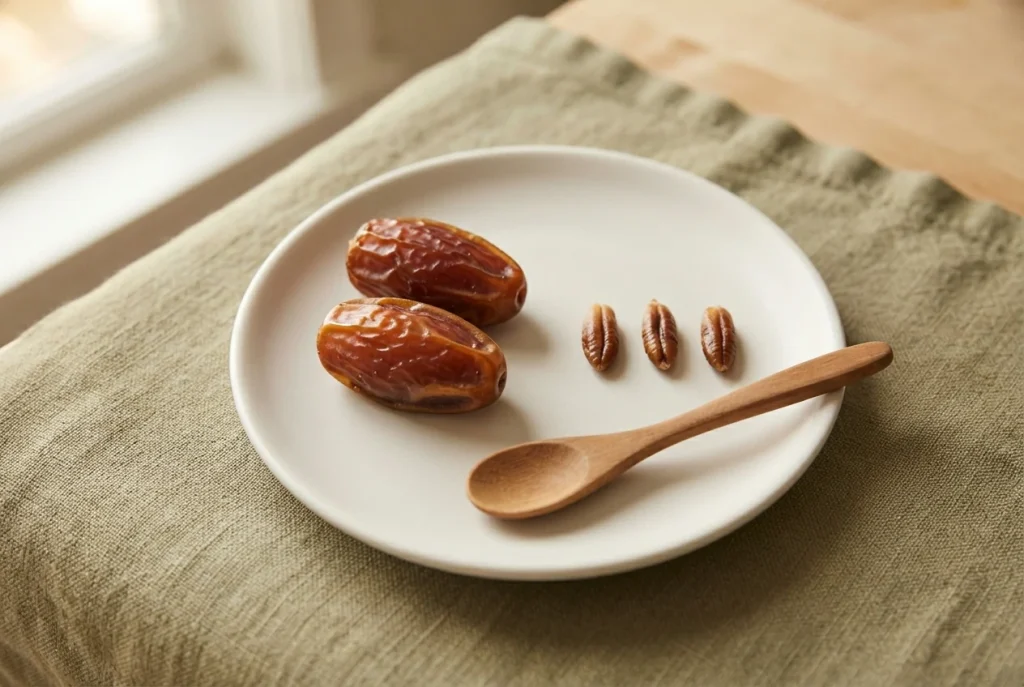
Five pits out of a 12 oz box: 1.1 oz. That’s 9% of the weight you’re paying date prices for — and date prices aren’t cheap.
- Unpitted: looks better, stores slightly better (intact skin holds moisture), and costs you ~9% in phantom weight. Buy these for a display tray or a gift box.
- Pitted: everything else. Snacking, stuffing, baking, blending. I no longer buy unpitted except for guests, and even that’s debatable.
The full price-per-ounce math — including why the printed weight lies to you on unpitted bags — is my favorite rabbit hole: price-per-ounce methodology.
Organic vs. conventional: what my receipts say
The organic premium ran $1.00–1.50/lb across my five packs. My verdict after this experiment: spend that money on freshness, not the organic sticker. Dates have thick skins and low residue concerns relative to soft-skinned fruit; the quality difference I measured came from pack dates and handling, not growing method. If organic matters to your household, fine — but don’t pay it and then grab the oldest bag on the shelf. That’s the actual mistake I see. For the fuller case on organic vs conventional, see our Are Organic Dates Worth It? guide.
What’s a fair price?
As of late 2025, my area (prices vary by region — treat these as bands, not gospel):
- Under $0.45/oz — stock up. This was the Costco pack. I bought a second.
- $0.45–0.65/oz — normal retail. Fine for a single bag.
- Over $0.75/oz — either Jumbo, a fancy gift-grade pack, or you’re being overcharged. All three exist. Check which one you’re holding.
And before anyone asks — yes, I’ve also bought the $30+ boutique Medjool box. It was beautiful. It was not three times better than the Costco pack, and I say that as someone who wanted it to be. If you’re deciding between the two major varieties, see our Medjool vs Deglet Noor guide. For the budget side of the shelf, our Deglet Noor buying guide covers it.
Storage in one paragraph
Sealed bag, cool dark pantry: 3–6 months easy. Fridge: up to a year, texture barely changes. Freezer: fine indefinitely, thaw what you need. Soft packs especially reward refrigeration after opening. The complete version, with what the white coating really is, lives in our date storage guide.
Frequently asked questions
Is Jumbo actually more expensive per ounce?
In my test: yes, by 60%. $0.75/oz for bulk Jumbo vs $0.47/oz for Large from the same store’s shelf. You’re buying bigger cells, not better fruit. The one time Jumbo earns its price is when the whole date is the presentation — a cheese board, a gift tray, a chocolate-dipped anything.
Why did the cheapest pack win?
Volume and turnover. The 2-lb Costco pack sells fast, so stock sits less time on the truck and the shelf. Perishability, not brand, decides Medjool quality — which is why the pack date matters more than the price.
How many Medjool is a serving?
One Large is about 20 g and roughly 66 kcal — and about 16 g of sugar, which is why a “handful” of dates is dessert, not a snack, in my honest bookkeeping. Two or three with coffee; stop there.