
Guide
Organic Dates Guide: Certification, Taste, and Price
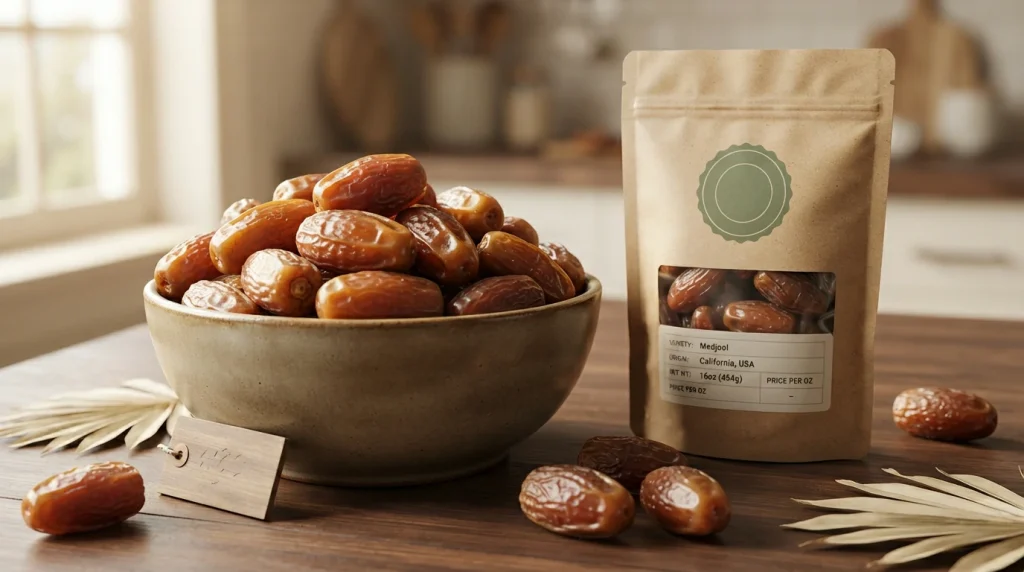
Organic dates cost more and rarely taste different. Here is what certification actually controls, how to read the label, and when the premium is worth paying.
The seal with a rulebook behind it.
Organic dates cost more, and in blind tastings they usually taste the same as their conventional neighbors. That leaves one honest question: what is the premium buying? The answer is a regulated production system — the USDA Organic label means a farm followed a specific rulebook, not that the fruit is residue-free. This guide covers what certification actually controls, how to read the label, and when the extra money is genuinely worth it.
What the USDA Organic seal actually does and does not say
The National Organic Program, run by the USDA Agricultural Marketing Service, regulates which inputs and practices a certified farm may use: a list of approved pesticides and fertility practices, buffer zones, and annual inspections. What the seal does not say is “pesticide-free” — certified farms may use approved substances, and final fruit is not routinely residue-tested under the organic rule itself.
For a crop like dates — where pests are limited, the fruit dries on the tree, and harvested dates rarely hold residues — organic certification is more about production-system compliance than about a measurably cleaner fruit. The are organic dates worth it analysis digs into that gap in detail.
EU organic, US organic, and the labeling gap
On the other side of the Atlantic, the EU organic logo similarly guarantees a regulated production method, not a residue guarantee. The two systems share a philosophy but not identical rules, and equality arrangements let a package carry both marks under defined conditions.
If you see the green EU leaf, the green-and-white USDA seal, or a phrase like “made with organic”, read the fine print: the seal only covers certified content, and the percentage claim (95% for the full USDA seal) is where the reality lives.
In side-by-side sampling, most people cannot reliably pick the organic date. Variety, ripeness at harvest, moisture content, and storage temperature drive flavor far more than certified growing practices do. A certified-organic Medjool from a poorly handled shipment will lose to a conventional Medjool that rode the cold chain properly — every time. The two traits worth paying attention to are variety and pack date, not the seal. Our Medjool variety guide and Deglet Noor variety guide walk through how each behaves; the seal sits far down the list of decision inputs.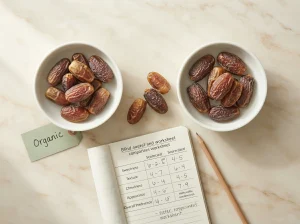 Side by side, the only visible difference is the claim on the label.
When the premium is worth it
The price premium is real: certified organic Medjool commonly runs 15–40% higher per pound than conventional from the same store. Spend it when a value beyond taste is what you are actually buying — supporting certified organic farming, a supply stream you want audited yearly, or peace of mind in a household that eats many dates weekly. Skip it, comfortably, when the fruit is being cooked, blended, or baked, where the seal adds nothing the final dish can taste.
How to read the label like an inspector
Four checks settle most confusion before the money moves: the seal should be paired with a certifier (a named organic certifying agent), the percentage claim should match the wording, the country of origin should be printed, and the pack date should be recent. A big “ORGANIC” banner with no certifier name and no country is a marketing claim, not a regulation.
For a one-stop match between what you want to cook and which dates fit, the Date Finder is the practical shortcut, and the Medjool buying guide covers the pack-date check that matters more than any seal.
FAQ
Are organic dates pesticide-free?
No — organic certification restricts which inputs and practices a farm may use in production; it is not a residue-free guarantee, and the rule is separate from residue testing on the finished fruit. The seal is a production-system claim, best read with the label’s fine print.
Why do organic dates cost more?
Certification, paperwork, smaller and often separate supply streams, and annual audits add real cost at every stage. Because dates face few residue issues to begin with, the premium typically buys regulatory compliance more than a cleaner fruit.
Do organic dates taste different from conventional ones?
In side-by-side sampling, most people cannot reliably tell them apart. Variety, ripeness, moisture, and storage drive flavor far more than certified growing practices do — so choose by variety and pack date, not by the seal alone.
Sources: USDA Agricultural Marketing Service, National Organic Program and the European Commission Organic Farming program; tasting and price comparisons store-tested