
Guide
How Long Do Dates Last? Pantry, Fridge, and Freezer Guide
UC Davis data and packer guidance: dates last about 3 months in the pantry, 6 in the fridge, and over a year frozen — with a Medjool vs. Deglet Noor breakdown.
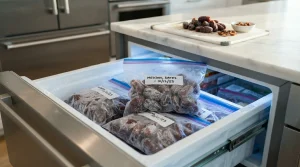
A freezer bag labeled “Medjool — February” came out of my freezer this week, eight months after I portioned it, and every date inside was still excellent. That wasn’t luck — it’s arithmetic. Dates last roughly a month in the pantry, about six months in the fridge, and more than a year in the freezer. Here are the numbers, with sources.
This page answers the lifespan question: how long dates last, variety by variety and method by method, with a source attached to every figure. The full storage system — containers, shelf positions, the reasoning behind each temperature — lives in the storage guide. Both pages enforce one standing rule: a number without a published source doesn’t get displayed.
The shelf-life numbers
Everything else on this page unpacks this table. The baseline is UC Davis postharvest data; the packer column is Natural Delights’ own published guidance:
| Storage | Temperature | UC Davis baseline (≤20% moisture) | Natural Delights (packer guidance) |
|---|---|---|---|
| Pantry | 20°C / 68°F | ~1 month | ~3 months |
| Refrigerator | 0–4°C / 32–39°F | 6–12 months (cultivar-dependent) | up to 6 months |
| Freezer | −18°C / 0°F | More than 1 year | up to 1 year |
Sources: UC Davis — Date Recommendations for Maintaining Postharvest Quality (Kader) · Natural Delights — How to Store Medjool Dates
The gap between the two columns isn’t a contradiction — it’s the difference between commercial storage (UC Davis: 0°C, humidity-controlled, optimized) and home storage (Natural Delights: fridge door swings, temperature fluctuates). The packer’s numbers are the ones that match an actual kitchen.
Medjool dates shelf life: the shortest clock on the shelf
The baseline numbers assume fruit at or below 20% moisture — and Medjool typically runs softer and wetter than that. Higher moisture content means faster quality movement in every direction, so I treat each window as a ceiling, not an entitlement. See the Medjool variety page for the full profile.
The practical answer to the fridge question: store dates in the fridge in an airtight container and the ~6-month packer window applies. My February-to-October bag is that arithmetic holding up in real life. Mine live on the back shelf, not the door; the door swings warm every time someone wants a soda, and temperature steadiness matters more than any label. A bulk pack — my 2-lb Costco buy from the five-pack test — goes to the fridge the day it comes home, no pantry stop in between.
Natural Delights’ storage page carries the packer-specific figures directly, and the UC Davis data backs the direction of the same claim: softer varieties move faster. When the grower and the postharvest research point the same way, that’s as settled as this category gets.
Deglet Noor shelf life: the forgiving one
Deglet Noor is a semi-soft variety, and the same UC Davis material that sets the baseline notes that semi-soft varieties outlast soft ones. Lower moisture content buys slack: the pantry window holds its ~1 month honestly, the fridge window runs toward the top of the 6–12 month range comfortably, and an open bag degrades at the edges — where exposed flesh dries — long before the center fruit notices.
Storing them is undemanding: airtight once opened, fridge for anything beyond a few weeks. The buying side matters more than the storing side with this variety, and my blind tasting settled it: the pack date predicts Deglet Noor quality better than the country on the label. A fresh bag of average origin beat a ten-month-old bag of the good stuff. Run the flashlight test before you buy — amber translucency is the freshness verdict — and storage becomes almost an afterthought. See the Deglet Noor buying guide for the full method.
Can you freeze dates? Yes — and portioning is the entire method
Freezing beats every pantry plan by a wide margin: the documented window extends past a year at −18°C, and Natural Delights independently lists up to one year frozen.
The method, which produced the February bag that opened this article:
- Pit if the dates are snack-bound. Future-you will not want to pit frozen fruit.
- Divide into portions you’d actually use in a week. One big bag defeats the purpose — every reopening pushes warm air in.
- Press the air out, lay the bags flat, label with the date. The label is the step everyone skips and the step that makes the system work.
- Thaw only what today needs. The rest stays frozen.
Thawed Medjool runs slightly softer than fresh-opened — irrelevant in oatmeal, smoothies, and the energy balls recipe. For eating straight, the difference is noticeable if you’re hunting for it. A post-Ramadan bulk buy stops being a liability the moment it hits the freezer in portions.
Pitted vs. unpitted: does the pit change the clock?
Marginally, and in one direction: unpitted dates hold moisture slightly better, because intact skin seals the fruit where pitted dates expose flesh at the pit cavity. The exposed spot dries at the edges the same way an open bag does — a little faster at the margins, no different in kind.
The practical split: everyday eating is pitted territory, convenience being the point — with the reminder that unpitted packages carry ~9% phantom pit weight in the printed ounce count, as covered in the Medjool buying guide. Unpitted earns its place for gift boxes and long pantry sits. Freezing: pit first, always.
How to store pitted dates, specifically: airtight, refrigerated, and eaten sooner than unpitted fruit would be. The cavity that makes them convenient also opens the door to edge-drying. Neither version is wrong; they’re just different clocks running at slightly different speeds.
Sugar bloom: the white coating that isn’t spoilage
The first time I saw it — a half-finished bag of organic Medjool gone powdery-white on the surface — I came close to throwing away perfectly good fruit. Sugar bloom is the name for what happened: temperature swings push moisture to the fruit’s surface, surface sugars dissolve, then recrystallize as dry white dust as conditions settle. It’s the same chemistry that blooms chocolate, and it changes appearance, not safety. Natural Delights confirms the same point on their storage page.
The field test takes five seconds: sugar bloom wipes away dry and crystalline, and the fruit underneath smells of caramel. Mold is fuzzy or colored, sits in patches, and carries a musty note. When the white stuff passes the wipe-and-smell test, the bag stays. The moisture-spectrum background for why some bags bloom and others don’t lives in the fresh vs dried guide.
Prevention is one sentence: steady temperature. Fridge door shelves and counter-to-fridge bouncing are how sugar bloom earns its keep.
Signs dates went bad
Real spoilage announces itself through smell and texture — color alone lies, because darkening is normal aging:
| What I check | What it tells me |
|---|---|
| Smell | Caramel = fine. Fermented, alcoholic, or “off” = done |
| Surface | Dry sugar dust = fine. Fuzzy or colored spots = mold = done |
| Texture | Drier-but-edible = fine. Slimy, weepy beyond normal syrup, or strangely hardened = done |
| Package | Broken seal or moisture inside = quality risk regardless of how the fruit looks |
The smell row outranks every other row in that table, and it isn’t close.
The best-by date is a quality date, not an expiry
USDA FSIS states it plainly: product dating generally concerns quality, not safety. A passed best-by date means the packer stopped vouching for peak condition — nothing more. See USDA FSIS — Food Product Dating.
What I do with an old bag, in order: run the four-row table above, check the package’s own storage instructions — the packer knows the handling history — and decide from evidence rather than calendar panic. The full inspection protocol lives in the storage guide. A bag that passes is a bag that gets eaten.
How to revive dry dates (and when to stop trying)
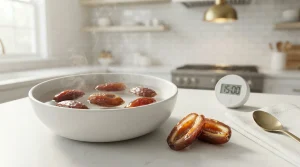
Dry dates are usually fixable. The base method: a 10-minute soak in warm water — the same soak that preps cheap Deglet Noor for blending, as covered in the cooking guide — restores enough give for snacking. Chopping them into oatmeal or blending them into date paste skips the revival step entirely; my $7-batch-of-dates-to-1½-cups-of-paste arithmetic was built on fruit drier than anything worth soaking.
Revival has one boundary, and it’s absolute: it fixes texture, never flavor that’s already gone. A fermented or alcoholic smell means compost, not rescue — no soak reverses fermentation. Everything short of that line is recoverable fruit.
Frequently asked questions
How long do Medjool dates last in the fridge?
Natural Delights, one of the largest US packers, lists up to 6 months refrigerated in a sealed container for Medjool. UC Davis postharvest data gives a broader range of 6–12 months at 0°C depending on cultivar, with soft varieties like Medjool at the shorter end. My own February-to-October bag — eight months — sits comfortably inside both windows.
Can you freeze dates?
Yes. UC Davis documents more than a year at −18°C / 0°F, and Natural Delights lists up to one year frozen. The method matters more than the freezing: pit, portion, press the air out, label with the date, thaw only what you need. Thawed dates run slightly softer, which disappears entirely in oatmeal, smoothies, and energy balls.
Do dates go bad?
Yes — dates go bad the way food goes bad: fermented or alcoholic smell, visible mold, texture that’s gone slimy or strange. What doesn’t count: darkening, wrinkling, or the white sugar-dust coating, which is recrystallized sugar, not spoilage. Smell is the row I trust over everything else on the checklist.
How do I soften hard dates?
A 10-minute warm-water soak fixes texture on almost any dried-out date. Beyond that, chopping into oatmeal or blending into paste skips the revival step and uses the fruit as-is. The one thing no method fixes: a fermented or alcoholic smell — that fruit is done, and soaking it just makes expensive compost.
How long do dates last after the best-by date?
The date is about quality, not safety — USDA FSIS states this explicitly. I inspect instead of obeying the calendar: the smell-texture-surface-package check, then the package’s own instructions. A bag that passes the check gets eaten with zero ceremony.
Should I store dates pitted or unpitted?
Unpitted holds moisture slightly longer thanks to intact skin; pitted dries at the edges a bit faster but wins on convenience for everything except gift boxes. Mine are pitted, refrigerated, and eaten quickly — and anything headed for the freezer gets pitted first, because future-me refuses to pit frozen fruit.
Sources: UC Davis — Date Recommendations for Maintaining Postharvest Quality (Kader, A.A., Dept. of Plant Sciences) · Natural Delights — How to Store Medjool Dates · USDA FSIS — Food Product Dating