
Guide
Deglet Noor Buying Guide: The 60-Second Flashlight Test
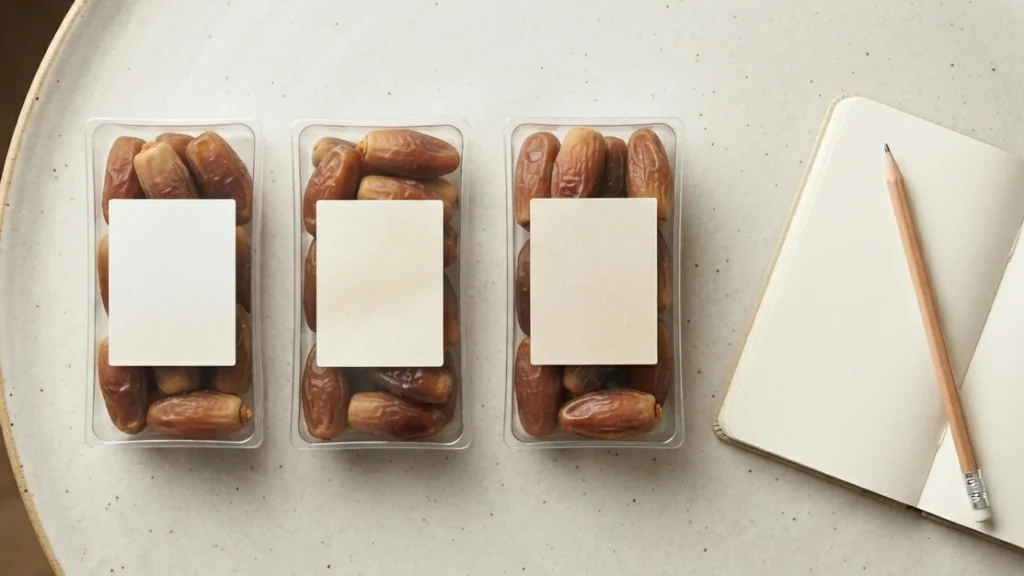
Blind-tasted Tunisian, Californian, and generic Deglet Noor. The flashlight test, fair prices, and why the pack date beats the country.
I did a deliberately annoying thing last month: I bought three bags of Deglet Noor from three different sources and made my wife taste them blind.
Bag 1: Tunisian, from the Middle East market — $5.99/lb
Bag 2: California (Trader Joe’s, pitted) — $3.49/lb
Bag 3: generic supermarket brand, origin not printed anywhere — $2.99/12 oz
I expected the Tunisian to win on price alone. It didn’t. Bag 2 won on a pack-date technicality, and that accident rewrote this entire guide. Here’s what the tasting showed, and the 60-second check I now run on every Deglet Noor purchase.
The blind tasting result
The Tunisian bag: honeyed, fragrant, slightly chewier — genuinely lovely. The TJ’s bag: a very close second, marginally softer. The generic bag: dry, papery, tasted faintly of the inside of a warehouse.
Then I flipped all three bags over. The Tunisian had been packed ten months earlier. The TJ’s bag showed a much fresher pack date. The origin mattered; the freshness mattered more. A great variety from a great region that sat in a warehouse since spring loses to an average bag shipped last month. Every claim in this guide now sits downstream of that one result.
The flashlight test (the tip worth the whole article)
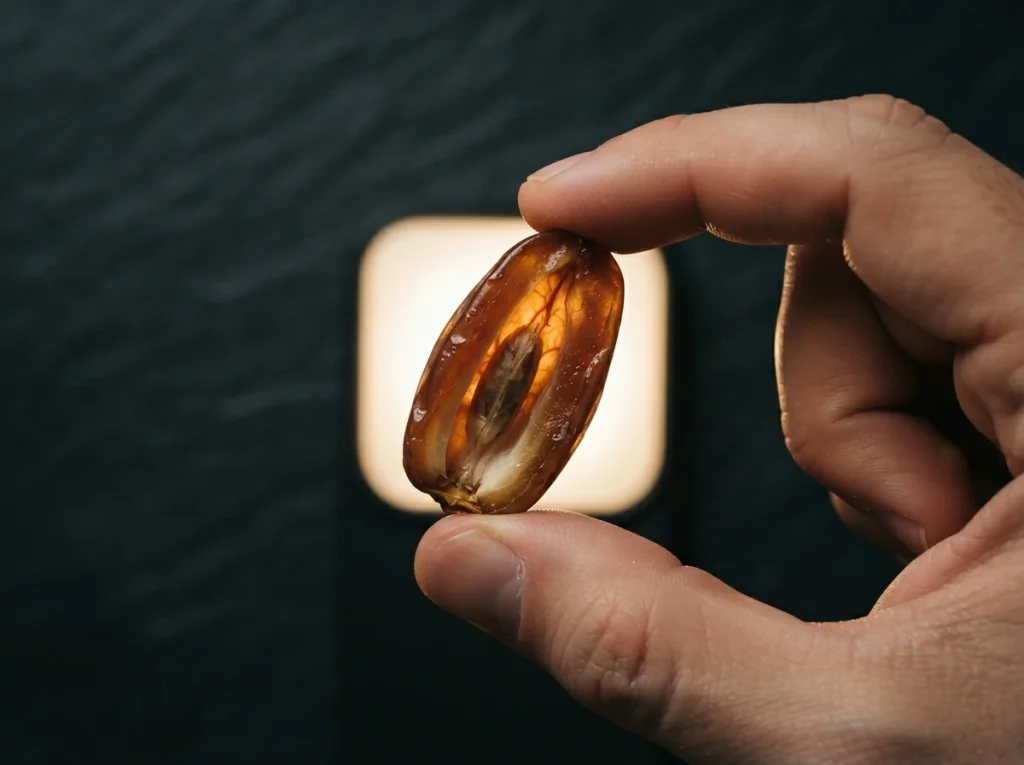
Deglet Noor is the one date you can judge by translucency — it’s thin-skinned and amber, and moisture shows through it like honey.
Hold a date up to your phone flashlight:
- Glowing amber at the edges → moist, mature, good fruit. Buy the bag.
- Opaque, dark, no light coming through → dried out. Could be old stock or rough handling. Skip.
- Any light test plus a sniff: a faint caramel smell is right; anything fermented or alcoholic means the bag is done.
I do this through the clear window of the pack or with one date from a bulk bin. Store staff have started giving me looks. Worth it.
Why Deglet Noor is so much cheaper (the real numbers)
From my table in the Medjool buying guide: Medjool at $0.41–0.75/oz vs Deglet Noor at $0.22–0.37/oz — roughly 40–50% less per ounce. The reasons are structural, not mysterious: Deglet Noor yields far more fruit per tree, handles machine pitting without falling apart (Medjool’s thick flesh is fussier), and ships and stores with less loss. Tunisia and Algeria grow it at enormous scale — it’s the backbone of North African date exports, according to FAOSTAT production data. Cheapness here is an economy-of-scale story, not a “lesser product” story.
One scale note for recipes: these things are tiny — roughly 100 to a pound pitted. A three-Medjool snack is about forty Deglets. When a recipe says “dates,” check which size the author meant before you pour.
Pitted or unpitted?
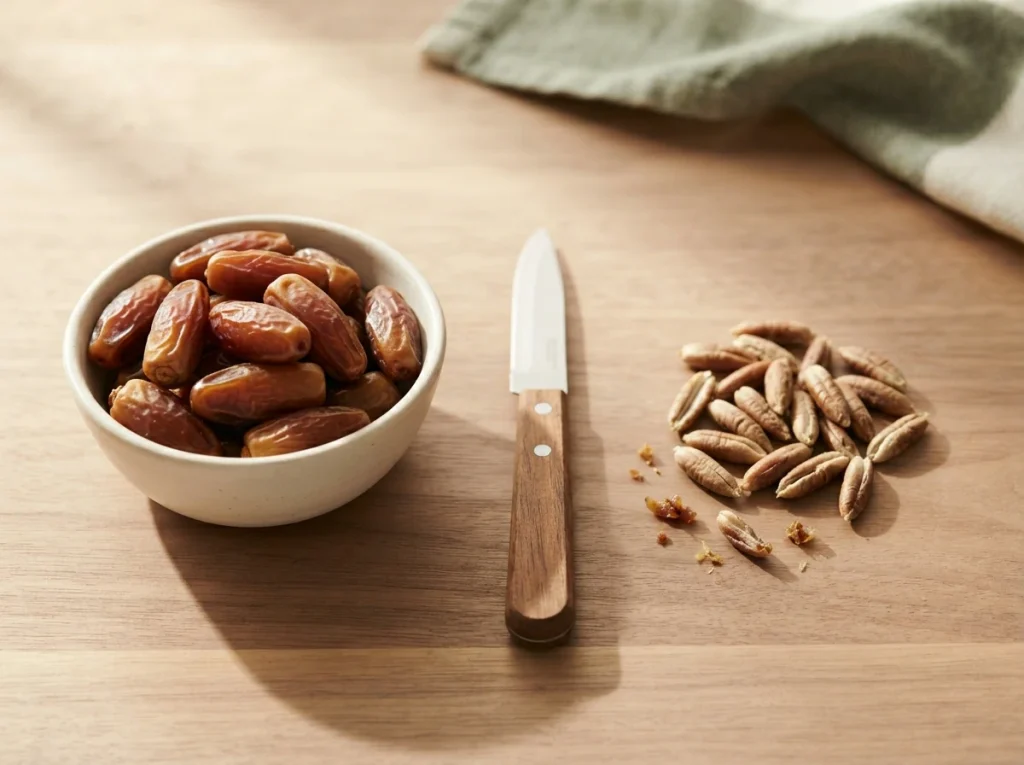
For Deglet Noor, pitted, almost always. The pit is a large fraction of these small fruits — you’re paying a bigger phantom-weight percentage than with Medjool, and nobody eats Deglet Noor for presentation; they eat it chopped, blended, or by the handful. The unpitted exception: bulk bins at Middle East markets, where they’re often fresher and cheaper anyway, and you can flashlight-test before buying.
My 60-second counter check
- Flashlight test one fruit — amber glow or walk away.
- Pack date if printed. Under six months: good. No date printed: lower your expectations or check the turnover of that shelf.
- Price per ounce — under $0.30/oz is the value zone; over $0.40/oz for plain Deglet Noor means the bag had better be Tunisian and fresh, or it’s overpriced. The full method is in our Price Intelligence Lab.
- Skin check — Deglet Noor wrinkles honestly: fine wrinkles are normal, sticky fermented sheen is not.
- One-bag rule — never buy the biggest pack on your first try of a source. My generic Bag 3 cost $2.99 and taught me a $2.99 lesson.
Origin: what it’s worth, honestly
Tunisian Deglet Noor at its freshest is the benchmark — the honey note is real, and it’s the variety’s homeland for a reason. California grows the same variety in the Coachella Valley and, fresh-packed, lands within tasting distance of it — that was my blind result. My buying rule after the experiment: choose the freshest bag first, the origin second. A printed pack date beats a country name. It’s a less romantic rule than “Tunisian is best,” but it’s the one my own blind tasting produced.
What to actually do with them
Deglet Noor’s drier, firmer flesh is exactly why it’s my cooking date — it survives braises that turn Medjool into soup, and its lower sweetness lets vinegar and chili speak in chutney. The full dish-by-dish breakdown with what worked and what collapsed is in our best dates for cooking guide. For baking ratios and which cakes want which variety, see our best dates for baking guide. And for the variety’s full profile, see the Deglet Noor variety page.
Storage is friendlier than Medjool’s — lower moisture means a longer, more forgiving pantry life — but open bags dry out faster at the edges. Seal well; fridge if you’re slow about it. Full storage rules are in our date storage guide.
Frequently asked questions
Why is Deglet Noor so much cheaper than Medjool?
Yield, machine-handling, and shelf life. It produces far more fruit per palm, survives mechanical pitting, and stores without heavy losses — and at 40–50% less per ounce than Medjool in my price table, that discount reaches your receipt. Cheap because of efficiency, not because of inferior fruit.
Does quality really differ between origins?
Between fresh Tunisian and fresh Californian: less than the price gap suggests — my blind tasting had them nearly tied. Between either of those and a stale bag of unknown origin: night and day. Origin is a flavor accent; freshness is the whole flavor.
Is Deglet Noor “worse” than Medjool?
Different tool. Eating one straight off a cheese board: Medjool. Cooking, baking, snacking at $0.25/oz, feeding a crowd: Deglet Noor wins and it isn’t close. My pantry holds both and they don’t compete.