
Guide
Medjool vs Deglet Noor: Which Date Should You Actually Buy?
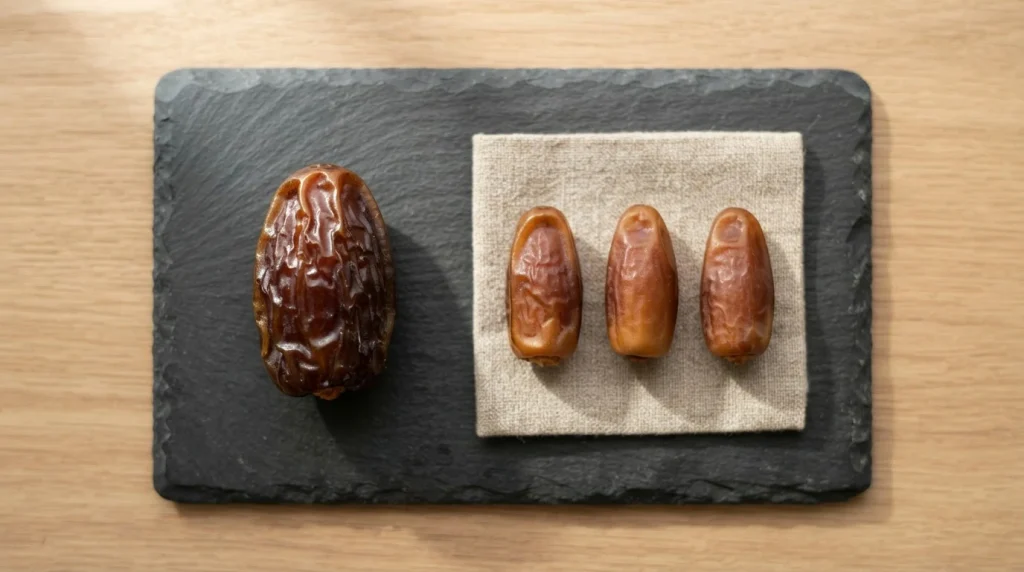
I keep both varieties in my pantry at the same time, and I reach for them for completely different reasons. After weighing ten of each and checking prices at four retailers in September 2026, here is what actually separates Medjool from Deglet Noor in a real kitchen.
I keep both varieties in my pantry at the same time, and I reach for them for completely different reasons. That’s the short version. Here’s the long one.
The bag that started this
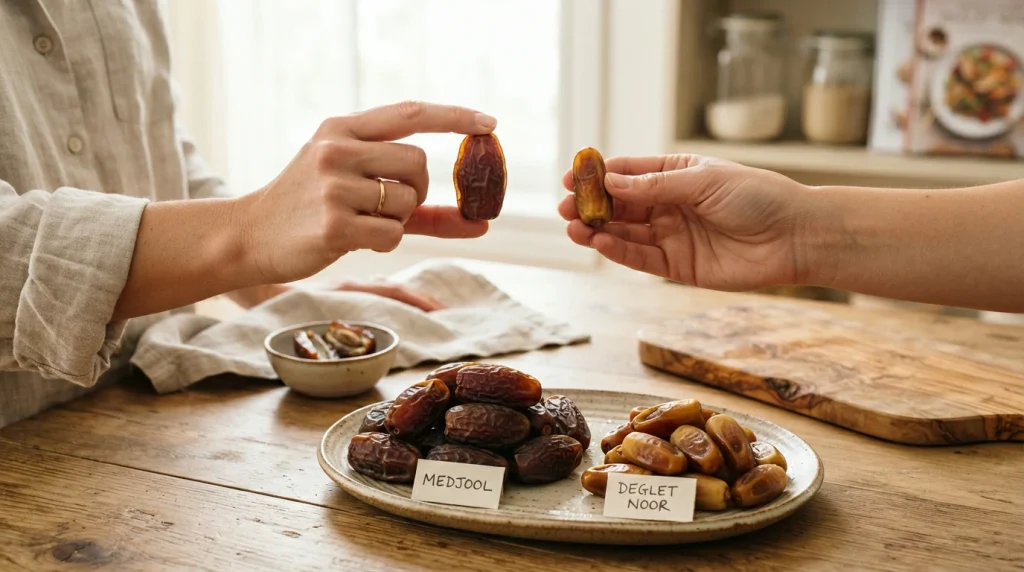
Two weeks ago I picked up a 2 lb bag of Medjool at $14.99 and a 1 lb box of Deglet Noor at $6.49 on the same shopping trip. Side by side on the counter, they don’t even look like the same fruit. The Medjool was fat, glossy, almost bruised-looking in a good way — like a fig that decided to be a raisin. The Deglet Noor was slimmer, matte, and firm enough that I could snap one in half without it sticking to my fingers.
I weighed out ten of each. The Medjool pieces averaged 24 g. The Deglet Noor averaged 9 g. That’s not a minor difference — it’s the reason a “handful” of one variety has roughly double the sugar of a handful of the other, and it’s the first thing that should factor into which bag you buy.
Texture is the real fork in the road
If you’ve only ever eaten Deglet Noor — which, if you’re American, you probably have, since it’s the one sold in most supermarket baking aisles — a Medjool can be a genuine shock. It’s soft enough that you can press a fingerprint into it. Mine had a caramel, almost toffee-like interior with a thin skin that pulls away cleanly. I ate three standing at the counter before I’d planned to review anything.
Deglet Noor doesn’t do that to you. It’s chewier, drier, and honestly a little bland eaten plain — which sounds like a knock, but it isn’t. That firmness is exactly why it holds its shape when you chop it into a batter or stuff it with bacon and throw it in a 400°F oven. I tried baking with Medjool once for a batch of energy balls and it turned into paste in the food processor before I’d even added the other ingredients. Worked great for that recipe. Would have been the wrong call for a granola bar that needed visible date pieces.
Price per ounce, which nobody puts on the shelf tag
Grocery stores love pricing dates per pound, which hides the real comparison. Here’s what I found checking four retailers in early September 2026:
- Terrasoul Medjool, 2 lb bag: $14.99 → $0.47/oz
- Rancho Meladuco Organic Medjool, 2 lb box: $21.00 → $0.66/oz
- Terrasoul Deglet Noor, pitted, 1 lb: $6.49 → $0.41/oz
- Generic bulk-bin Deglet Noor at a regional grocery chain: $3.99/lb → $0.25/oz
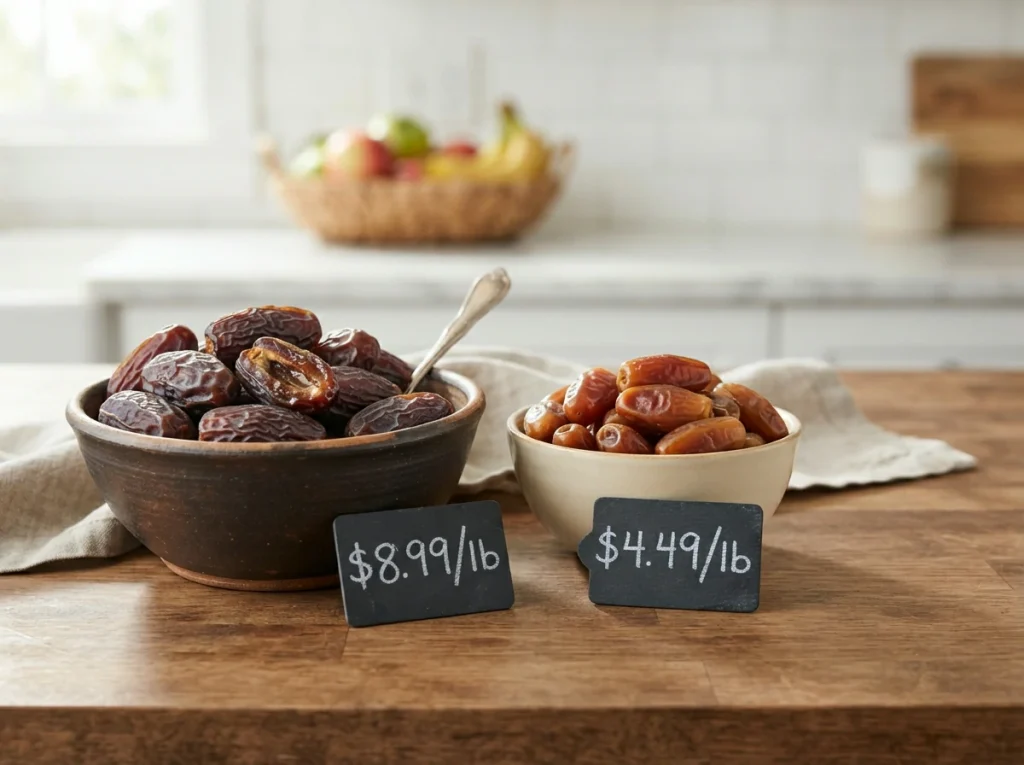
Deglet Noor wins on price almost every time I’ve checked, sometimes by a wide margin. But the Medjool premium buys you something specific: you eat less of it to feel satisfied, because the sugar and moisture content hit harder per piece. When I’m using dates as a standalone snack, three Medjool fill the same role as six or seven Deglet Noor. Run the math on your actual serving size, not the sticker price, before deciding which one is “expensive.” For a full breakdown of the method we use to normalize this, see our Price Intelligence Lab.
Where each one actually belongs in a kitchen
I stuff dates with almonds and wrap them in bacon for parties — a recipe that fails with soft dates because the filling squeezes out the second you pick one up. Deglet Noor holds a slit-and-stuff shape through baking. Medjool doesn’t; I learned this the messy way, over a sheet pan, at 8 pm before guests arrived.
For a quick energy ball or a date paste I’m blending into oatmeal, Medjool is the only one I reach for. Its moisture content means you barely need to soak it before blending, while Deglet Noor needs 15–20 minutes in warm water first or your food processor just grinds dry chunks instead of a paste.
For plain snacking — the kind where you grab one on your way out the door — Medjool wins for most people I’ve handed both to. My nephew, who is seven and unsentimental about food opinions, picked the Medjool every single time in an entirely unscientific taste test I ran over a weekend. Two adults in that same test actually preferred the Deglet Noor, saying the Medjool was “too much,” which tells you something about how polarizing that caramel intensity can be.
The organic question
Rancho Meladuco’s organic Medjool line costs about 40% more per ounce than the non-organic Terrasoul bag I bought. I couldn’t taste a meaningful difference between the two in a blind comparison with my partner — both scored them within a point of each other on sweetness and texture. If pesticide exposure is your concern rather than flavor, organic certification is worth paying for. If you’re buying for taste alone, I wouldn’t spend the extra money based on what I tasted. (For the regulatory detail behind organic claims in the US, see the USDA Agricultural Marketing Service’s organic certification overview.)
For a deeper look at the organic premium specifically, I broke down the pricing across both varieties in our Are Organic Dates Worth It? guide.
What I’d actually tell a friend at the grocery store
Buy Deglet Noor if you’re baking, if you want a lower-sugar snack, or if you’re on a budget and eating dates regularly. Buy Medjool if you want something that eats like dessert, if you’re making a quick paste or energy balls, or if you’re gifting a box and want it to look impressive when someone opens it — Medjool photographs and presents better, full stop.
Neither one is the “better” date in some abstract sense. They’re doing different jobs. What I will say plainly: if you’ve been buying Deglet Noor out of habit because it’s what your store stocks, and you haven’t tried a good Medjool, you’re missing out on a genuinely different eating experience — not a marginal upgrade, a different fruit in practice. Go buy one bag and find out for yourself.
Prices checked September 2026 across four retailers; expect regional and seasonal variation of 10–15%.
Frequently asked questions
Is Medjool sweeter than Deglet Noor?
Yes, noticeably. In my own blind comparison with my partner, we both scored Medjool higher on sweetness and intensity. Part of that is per-piece size — a single Medjool weighs roughly 24 g versus about 9 g for a Deglet Noor — so you are also getting more sugar per bite, not just a different flavor profile.
Which is better for baking, Medjool or Deglet Noor?
Deglet Noor, almost every time. Its firmer texture holds a chop and survives the oven, which is why you will find it (and not Medjool) in most supermarket baking aisles. I have tested Medjool in energy balls and it works beautifully as a paste, but for any recipe where you want visible date pieces, Deglet Noor is the safer pick.
Are Medjool dates more expensive than Deglet Noor?
Yes, and the gap is real when you normalize to price per ounce. In my September 2026 check across four retailers, Medjool ranged from $0.47 to $0.66 per ounce, while Deglet Noor ranged from $0.25 to $0.41 per ounce. The premium buys you a softer, more dessert-like eating experience, not more nutrients.
Is fresh better than dried dates?
Not automatically. “Fresh” on a US label usually signals a higher moisture content at packing time, not a recent harvest. Moisture level, storage method, and the ripeness stage at picking affect texture and shelf life far more than the fresh-versus-dried label alone. For a full breakdown, see our fresh vs dried dates guide.
Full transparency on how we track prices and how outbound links work: see our affiliate disclosure.