

Guide
Zahidi Dates: The Baker’s Workhorse — Profile, Density, and Price
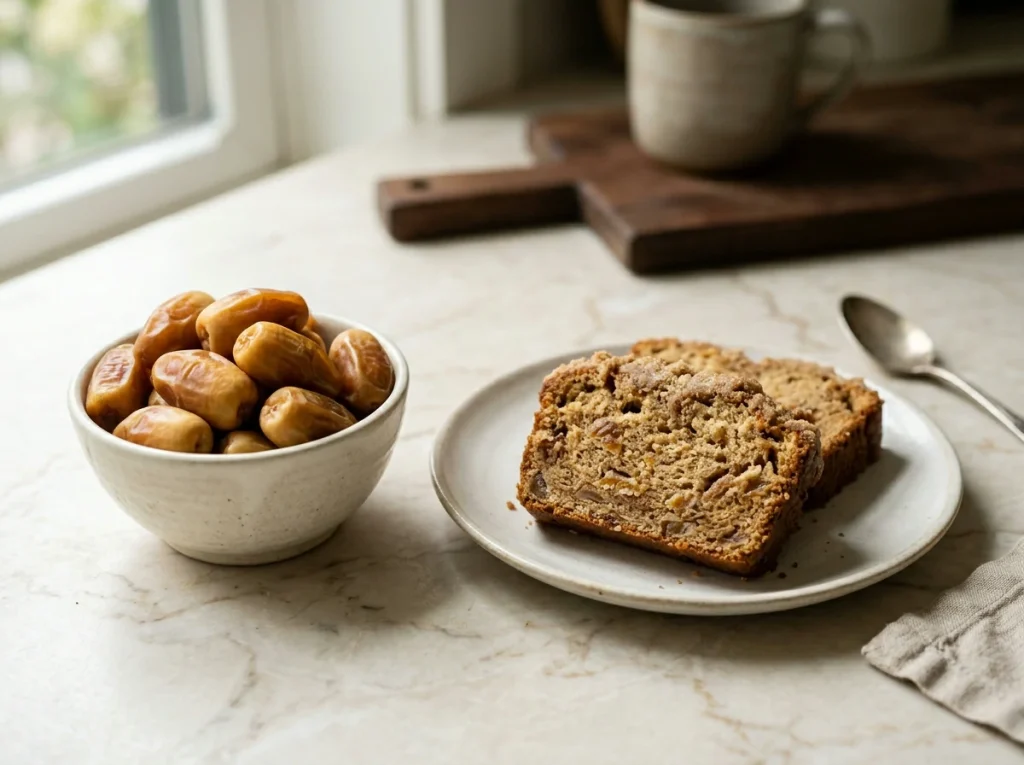
Zahidi is the firm, golden, low-moisture date that holds shape under heat — the baking workhorse that beats Deglet Noor on density and Medjool on price.
The baking-variety gap (and why Zahidi fills it)
Most baking recipes that call for dates call for Medjool, because Medjool is the variety bakers know. The result is usually a good bake with a soft, almost-dissolved date presence — the Medjool gives moisture and sweetness but loses its shape and texture under heat. Deglet Noor is the alternative most bakers reach for next; it holds shape better than Medjool but runs lower on density, leaving the bake with a thinner fruit presence.
Zahidi sits in the gap. It is firmer than Deglet Noor, denser than Medjool, lower-moisture than both, and it holds its shape under the same heat that turns Medjool to mush. A Zahidi chopped into a coffee cake comes out of the oven as a recognizable piece of fruit; a Medjool in the same recipe comes out as a soft, dark streak. The baker’s choice is whether the date is a presence (Zahidi) or a stain (Medjool). Our best dates for baking guide shows where each variety fits.
Texture: firm, golden, low-moisture
Zahidi’s texture is the firmest in the buying rotation — firmer than Deglet Noor, much firmer than Medjool, comparable in firmness to a dried apricot but with the date’s sugar profile. The flesh is golden-yellow even when fully dried to tamar, where most other varieties darken to brown. That golden color carries through baking, which is why a Zahidi-studded coffee cake has visible yellow-gold pieces where a Medjool-studded coffee cake has dark amber streaks.
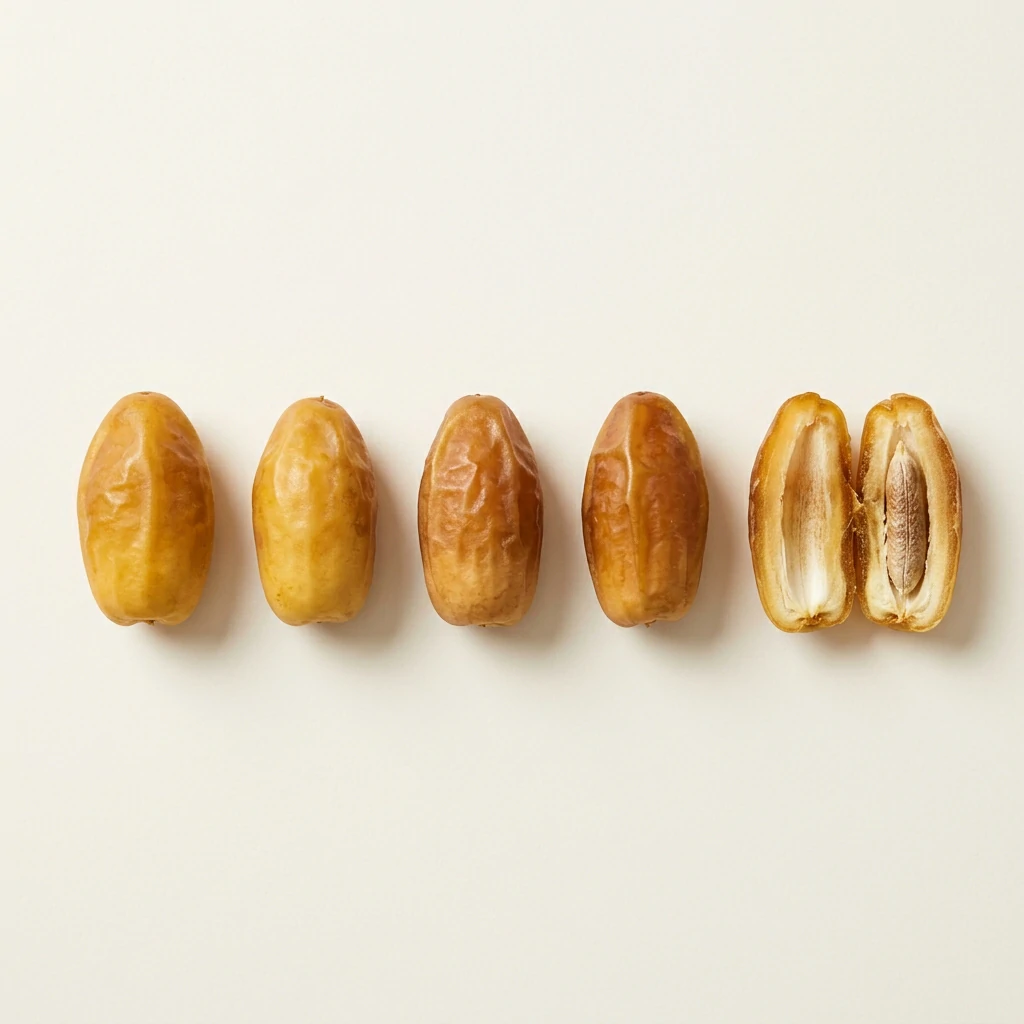
The low moisture content (under 20% at tamar) is what makes Zahidi hold its shape under heat. Higher-moisture dates like Medjool steam and collapse in the oven; low-moisture dates like Zahidi hold their structure because there isn’t enough water in the fruit to soften the cell walls during the bake. The trade-off is that low-moisture dates are firmer and less pleasant to eat raw — which is why Zahidi is the baking variety, not the snacking variety. For a scored breakdown, open the Zahidi flavor wheel.
Density and what it means for the recipe
Density in the date context means sugar-and-fiber per unit of volume, not per unit of weight. Zahidi is denser than Medjool by volume because the lower moisture leaves more fruit solids per cubic inch. A recipe calling for a cup of chopped Medjool gets a certain amount of fruit sweetness; the same cup of chopped Zahidi gets noticeably more, because the Zahidi packs more fruit into the same space.
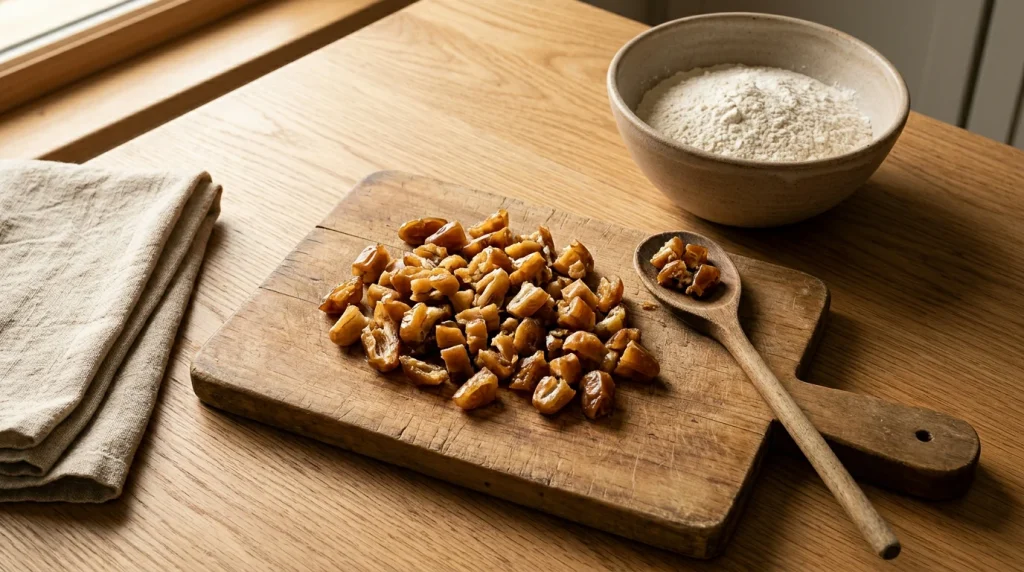
The practical consequence is that recipes calibrated for Medjool can over-sweeten when Zahidi is substituted one-for-one. The reverse is also true — recipes calibrated for Zahidi can come out under-sweet when Medjool is substituted. The field-tested adjustment is to swap by weight, not by volume, and to reduce the other sugar in the recipe by about 15% when moving from Medjool to Zahidi. The sweetener guide covers the substitution math in more detail.
Zahidi vs Deglet Noor: the baking head-to-head
Zahidi and Deglet Noor are the two varieties most often compared for baking, and the choice comes down to what the recipe needs. Deglet Noor is semi-soft, slightly sweeter, and blends into bakes where the date is meant to be a background note. Zahidi is firm, slightly milder, and stays present in bakes where the date is meant to be a foreground presence. A coffee cake with visible fruit pieces wants Zahidi; a sticky toffee pudding where the date dissolves into the sauce wants Deglet Noor. For the wider picture, see Medjool vs Deglet Noor.
The price-per-ounce reality favors Zahidi — it commonly runs 70–85% of Deglet Noor’s price, partly because it is less popular for snacking and partly because the firm texture makes it easier to ship and store without damage. For baking volume, the price advantage compounds; a kitchen that bakes with dates weekly will notice the difference over a year.
Price per ounce: where Zahidi sits
Zahidi is the lowest-priced date in the buying rotation across most channels — commonly 50–65% of Medjool’s price per pound and 70–85% of Deglet Noor’s. The price reflects demand, not quality; Zahidi is the firmest variety in the rotation and the least popular for snacking, which depresses the price for buyers who are buying for baking. The same low-moisture profile that makes Zahidi the baking workhorse also makes it the shelf-stable workhorse — long storage, low spoilage, low waste. The price-per-ounce method explains how we compare packs.
Buying Zahidi
Zahidi is sold under fewer brand names than Medjool or Deglet Noor; you’ll see it loose at Middle Eastern grocers, in bulk bins at some specialty shops, and in 1-lb to 5-lb packs from online date retailers (see the 5-lb Zahidi bulk pack). The pack-date check matters less for Zahidi than for the softer varieties because the low moisture buys more shelf-life slack — a six-month-old Zahidi is still good for baking where a six-month-old Medjool is past peak. The flashlight test for amber translucency is the same field check (the freshness guide walks through it); a Zahidi that shows amber translucency through the flesh is fresh enough to use.
Frequently asked questions
Can you eat Zahidi raw?
You can, but it isn’t the snacking date. The firm texture and lower moisture make it chewier than Medjool or Halawi, and the flavor is milder. For raw snacking, Medjool or Halawi are better choices; Zahidi earns its place in the baking rotation, not the snacking bowl.
Why is Zahidi the baking date?
Zahidi is the baking date because of its firm texture and low moisture content (under 20% at tamar). Higher-moisture dates like Medjool steam and collapse in the oven; low-moisture dates like Zahidi hold their structure because there isn’t enough water in the fruit to soften the cell walls during the bake. The result is visible fruit pieces in the finished bake, not a soft streak.
Is Zahidi the cheapest date?
Across most channels, yes — Zahidi commonly runs 50–65% of Medjool’s price per pound and 70–85% of Deglet Noor’s. The price reflects demand (low, because Zahidi is less popular for snacking) and supply advantages (the firm texture makes it easier to ship and store without damage).
Where do you find Zahidi?
Middle Eastern grocers carry loose Zahidi in bulk; specialty food shops sometimes carry it in 1-lb packs; online date retailers stock it in 1-lb to 5-lb packs. Pack-date checking matters less for Zahidi than for softer varieties because the low moisture buys more shelf-life slack.
How do you soften Zahidi?
A 10-minute soak in warm water softens Zahidi enough for chopping or blending, though the firm texture means it won’t reach the softness of Medjool by soaking alone. For baking, the firm texture is the point — soften only if the recipe specifically calls for soft dates.
Sources: UC Davis — Date Recommendations for Maintaining Postharvest Quality (Kader, A.A., Dept. of Plant Sciences) · USDA FoodData Central — date composition reference · Penn State Extension — Home Food Preservation