
Guide
Halawi Dates: Flavor, Texture, and Best Uses
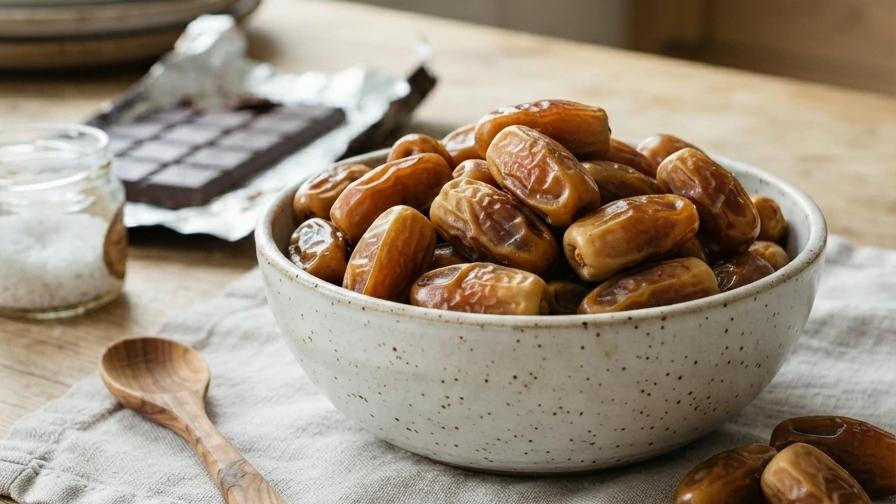
Nobody asks for Halawi, which is exactly why it is the best value in the date aisle. The case for the middle child: firm-chewy, caramel-mild, survives a tagine that dissolves Medjool, and costs a third less.
Nobody has ever said the word “Halawi” to me in a store. Not once. And yet the $6.49/lb bag I nearly walked past last month has quietly become the most-reached-for date in my kitchen — the one that goes in tagines, the one guests can’t identify as the budget option, the one I now buy two bags of when I see a fresh pack.
This is a profile of the middle child of the date aisle: not the giant everyone photographs, not the cheap workhorse everyone churns through. The one in between that’s better than both, for certain jobs, at a price that still surprises me.
What Halawi actually is
Halawi (you’ll also see Halawy — same date, transliteration fight) has real roots: it’s historically associated with Basra, Iraq, and it’s grown commercially in California too. That matters practically: California-grown Halawi means fresher supply chains for U.S. shoppers, and U.S. availability swings on production and distribution more than on anything happening in the fruit itself.
California date-industry descriptions give the sensory profile: sweet with a caramel-candy character, firm-chewy bite, softer flesh underneath. Those descriptions held up on my counter — but I’ll treat them as clues, not lab fingerprints, because sensory descriptions are written by people who love the variety. Everyone’s brochure is glowing.
The identification problem (and why I won’t pretend otherwise)
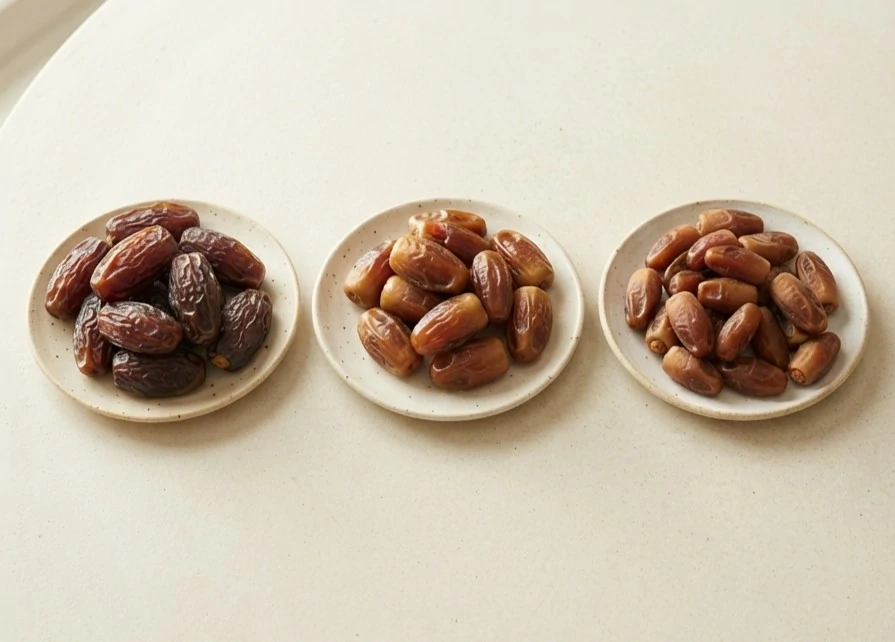
Here’s the honest part: Medjool, Halawi, and Deglet Noor overlap enough that blind identification is genuinely hard. A non-expert tastes a well-made date and correctly identifies “date.” Naming the cultivar? That’s a trained palate, and I won’t claim a blind-test success rate I never measured.
What actually helps is comparing clues side by side, with full knowledge that any single clue lies sometimes:
| Clue | What to observe |
|---|---|
| Skin | Smoothness and thickness against the chew |
| Moisture | Soft give versus firmer resistance |
| Size | Medium — clearly below Medjool, clearly above Deglet |
| Flavor | Caramel-candy sweetness, less loud than Medjool |
Where it sits against the two famous neighbors
| Medjool | Halawi | Deglet Noor | |
|---|---|---|---|
| Texture | Soft, juicy | Firm-chewy, soft flesh | Dry, firm |
| Sweetness | Loud caramel | Mellow caramel | Mild |
| Price (my snapshots) | $6.50–12/lb | $5–7/lb | $3–6/lb |
| Survives a long braise | No — collapses | Yes | Yes |
| Eats well plain | Best in class | Very good | Fine |
The kitchen result that sold me
The tagine. In my cooking tests, Halawi added in hour two of a lamb braise came out whole — jammy at the edges, still recognizably dates — where Medjool had dissolved into sweet soup an hour earlier (the full disaster lives in our best dates for cooking guide). Same dish, same heat, different skin and flesh density. That single retest moved Halawi from “nice budget date” to “permanently stocked” in my kitchen.
And the guest test: when I packed three glass jars for gifts (see the gifting guide), the Halawi jar — the cheapest one — drew zero comments about being the cheap one. Nobody guessed. Nobody ever guesses. Caramel flavor doesn’t show receipts.
Price logic, kept honest
A useful comparison is same period, same unit, same seller type: one-pound Halawi listing against one-pound Medjool and Deglet Noor listings from the same week. The meaningful output is the percentage difference, not a slogan — Halawi isn’t “always cheaper” than anything; it’s usually cheaper than Medjool in the same store the same week, which is the comparison that actually faces you at the shelf. My formula notes are the same ones I use everywhere on this site: price ÷ pounds, recorded with a date.
Verdict
Buy Halawi when: you cook with dates (braises, chutney, anything needing the fruit to survive), you want a soft-date experience below Medjool prices, or you’re building gift jars where taste matters more than size.
Skip it when: you want the showpiece giant for a tray (that’s Medjool, and the price buys the size), or you want the absolute floor price for blending into paste (that’s Deglet Noor territory).
Frequently asked questions
Could I identify Halawi in a blind tasting?
I won’t claim a success rate without a documented tasting — and I’d label any future tasting as its own experiment. What I can say: published sensory descriptions (caramel-candy, firm-chewy) matched what I tasted, and side-by-side comparison makes it clearer than single-bite guessing ever will.
Why can Halawi cost more or less than Medjool?
Because price reflects origin, crop year, supply, packaging, seller, and shipping — variety is only one input. A single price snapshot can’t establish a permanent hierarchy; a dated, same-store comparison can tell you what to do today.
Is Halawi a good Medjool substitute?
In some uses, genuinely yes — and in others, no. Firm-chewy isn’t soft-juicy, and a recipe built around Medjool’s moisture will notice. I choose by what the recipe needs, not by assuming the varieties are interchangeable.
Sources: USDA/California date-industry references for regulated California varieties · UC ANR postharvest information on date cultivars · California date-industry sensory descriptions of Halawi/Halawy