
Guide
Best Dates for Gifting: How to Build a Date Gift Box
Dates make a welcome gift — but the box, not the fruit, decides whether it reads as cheap or considered. Here is how to build a three-variety gift box that lands, what it costs, and when the premium brand is worth it.
Last Eid al-Fitr I made a mistake I’m still hearing about. I bought my mother-in-law a cellophane tub of Medjool — good dates, $11.99, decent brand — and handed it over feeling pleased with myself. Two days later her neighbor arrived with a wooden Bateel box: satin ribbon, gold interior, three varieties nested like jewelry.
My tub went to the pantry. The Bateel box lives on her shelf. Empty. She stores sewing supplies in it.
That’s the thing about giving dates as a gift: almost nobody needs the calories. Your recipient already has dates in the house — in most Muslim households they arrive with the coffee before you’ve taken off your shoes. What you’re giving is ceremony. The box, the varieties, the small touches carry more weight than the fruit itself.
I’ve given date gifts to about a dozen people across two Ramadans now. Here’s what I learned, including what I spent down to the label-maker tape.
Three varieties do the heavy lifting
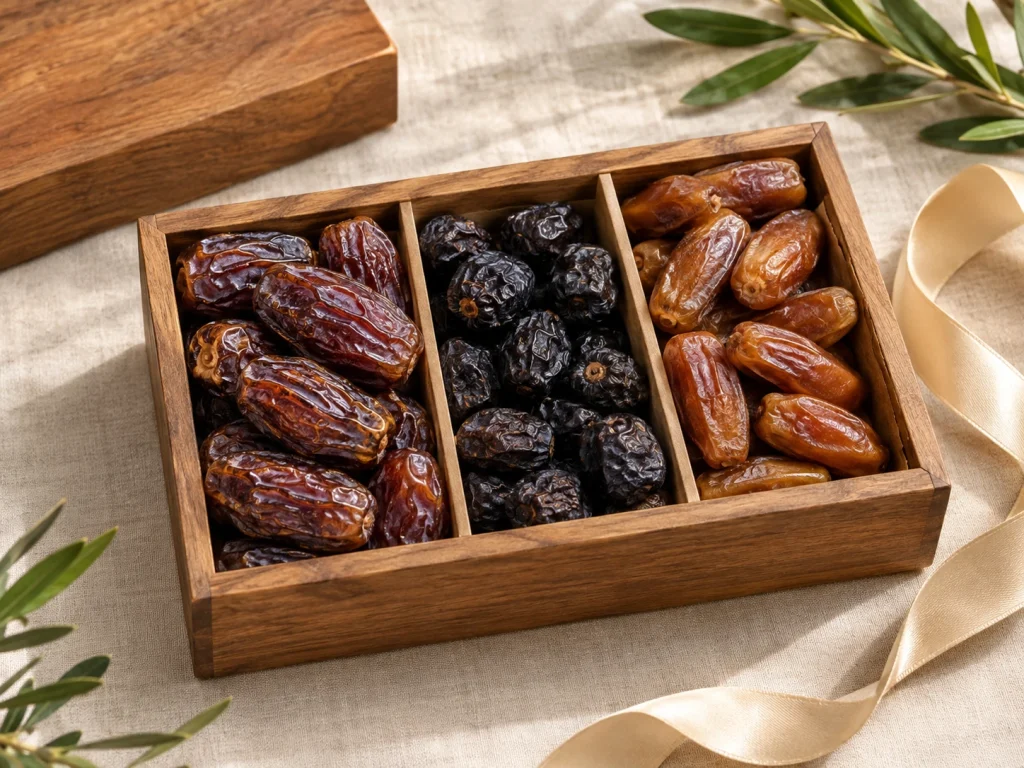
Medjool is the one everyone recognizes. Walnut-sized, caramel-sweet, soft enough to eat with your fingers without committing to a jaw workout. Nobody has ever been unimpressed by a glossy Medjool.
Ajwa is the prestige pick. Small, dark, drier, noticeably less sweet than Medjool, grown in Medina. For Muslim recipients it carries weight no other variety touches — it’s the date praised in hadith collections, and in my experience the first one people reach for at Eid gatherings. If your recipient fasts Ramadan, Ajwa is the closest thing to a sure bet in this whole category. For more background on the variety, see our Ajwa variety page.
Halawi is the smart filler. Soft, caramel-brown, a fraction of Ajwa’s price, and closer to Medjool in taste than the price suggests. Nobody guesses it’s the budget one. Details on Halawi here.
Build around three varieties, maximum. Four or more turns the box into a buffet where nothing gets finished.
The 3-2-1 rule I use now
For a box feeding four to six people: three parts crowd-pleaser (Medjool), two parts something they probably haven’t tried (Halawi, Khudri, or Safawi), one part showpiece (Ajwa — or stuffed dates if the box is going to a mixed crowd).
That’s roughly 1.5 pounds of fruit total. More than that, and the last third sits around going leathery before anyone reaches it — dates only keep their quality for months if they’re stored properly, which brings me to the one thing most gift boxes forget:
Tuck in a small card with storage instructions. “Seal after opening; refrigerate if soft.” It costs nothing, and it makes a modest gift read as considered rather than cheap. Full storage rules are in our date storage guide.
What I actually spent last Ramadan
| Recipient | What I sent | Cost | What happened |
|---|---|---|---|
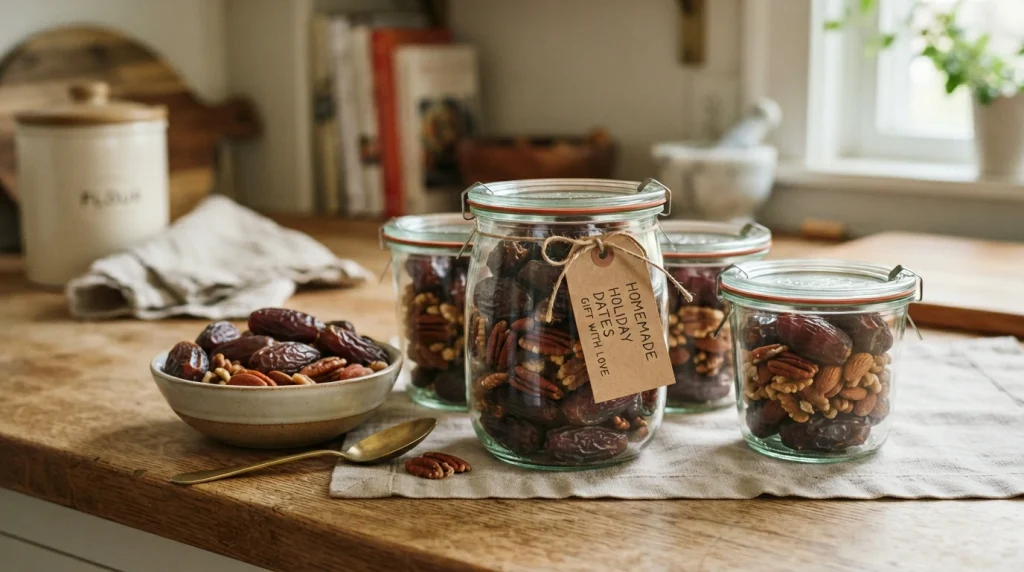
| Sister-in-law | 3 glass jars: Medjool / Ajwa / Halawi, kraft labels, ribbon | ~$27 | Asked where I “ordered” it. Dollar-store jars. |
| Father-in-law | Same build, bigger Ajwa share | ~$35 | Photographed it before opening. |
| Dinner hostess | Trader Joe’s Medjool, 1 lb, in a $3 tin | ~$9 | Finished that night. |
| Mother-in-law (round 2) | Bateel assortment box | $79 | Empty box = sewing kit. Worth it, apparently. |
Total: about $150 for four gifts. My verdict after four rounds: the $27 jar box and the $79 Bateel box landed almost identically — with one exception, the recipient who knows brands from ten feet away. Boss, client, or a mother-in-law like mine? Pay for Bateel. Everyone else gets jars, labels, ribbon, and you keep 80% of the effect at a fifth of the price.
Packaging, in order of what actually matters
- Glass jars, not cellophane. Cellophane says “gas station.” Glass says “someone thought about this.”
- The storage card. See above. Underrated.
- Ribbon. I don’t make the rules. It just works.
- Skip chocolate-dipped anything if you’re shipping between May and September. I shipped a chocolate-dipped box to Phoenix in June. It arrived as dates wearing fondue.
Timing it around Ramadan
Dates breaking the fast at iftar is a tradition anchored in religious practice and Gulf hospitality alike. The UAE government publishes a plain overview of Ramadan customs for visitors that captures the framing well. Practical takeaway: order at least three weeks before Eid. Prices climb and Ajwa sells out — my local market’s Ajwa went from $22 to $28 a pound in the final ten days last year. And since Ramadan starts roughly ten days earlier every solar year, plan off the Hijri calendar, not last year’s shopping dates.
When dates are the wrong gift
- Fresh dental work or braces. Soft Medjool sticks to everything and the recipient will smile through pain.
- The “sugar-free” friend. Dates are sugar. Kind, delicious sugar — but presenting a date box as a health gift is a stretch.
- The relative who received six date boxes last Eid. Go Ajwa to stand apart, or change the gift entirely.
- Diabetic recipients. This is a judgment call for their family, not yours. When in doubt, ask.
If the recipient is a savory-leaning cook rather than a sweets person, a small box of cooking-grade dates paired with a recipe card lands better than a dessert assortment. See our best dates for cooking guide for what to pair.
Frequently asked questions
Can I give dates to someone who says she doesn’t like sweets?
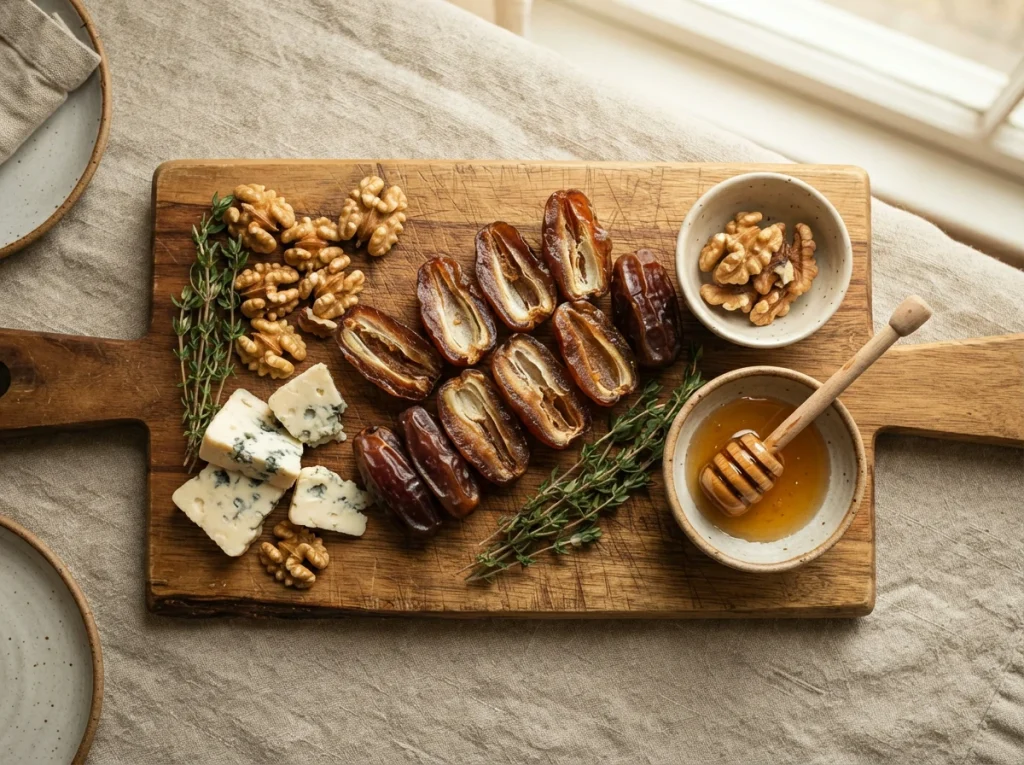
My sister claimed this for years. The trick is salt and fat, not sweetness: Medjool with a flake of sea salt on a cheese board, or stuffed with goat cheese. Once you pair dates with something savory, the “too sweet” objection usually disappears.
How early should I order before Eid?
Three weeks. I watched Ajwa jump $6 a pound in the last stretch of Ramadan. The good stock also goes first — by Eid week you are choosing between leftovers and overspending.
Does a cheap box look stingy?
Cheap doesn’t look stingy. Careless does. A $9 tub tossed in a bag looks like a chore; a $27 jar box with a label and a storage card looks like effort. The receipt matters less than the intention.