
Guide
Dates for Kids: Feeding, Choking Safety, and Lunchbox Ideas
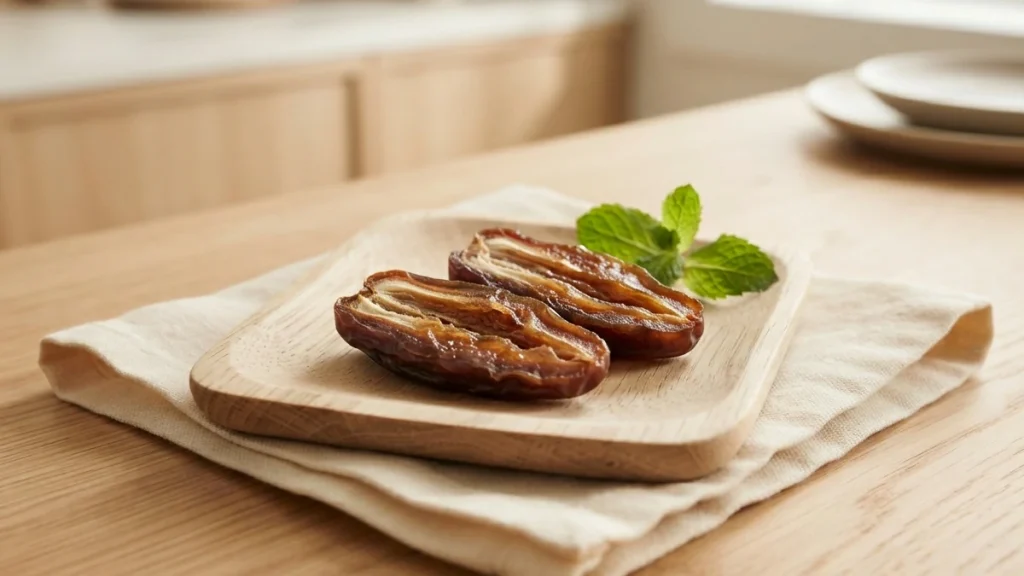
Parents ask whether dates are a good snack for children. This guide covers when babies can have dates, how to serve them safely, what they offer nutritionally, and how to pack them for school.
Parents ask whether dates are a good snack for children — and the honest answer is yes, with two conditions attached: texture and supervision. Dates are sweet enough that kids love them, dense enough in fiber and minerals to earn their place in a lunchbox, and sticky enough that the wrong shape is a genuine choking hazard. Get those two conditions right and dates become one of the most useful things in the snack drawer.
Feeding dates to babies
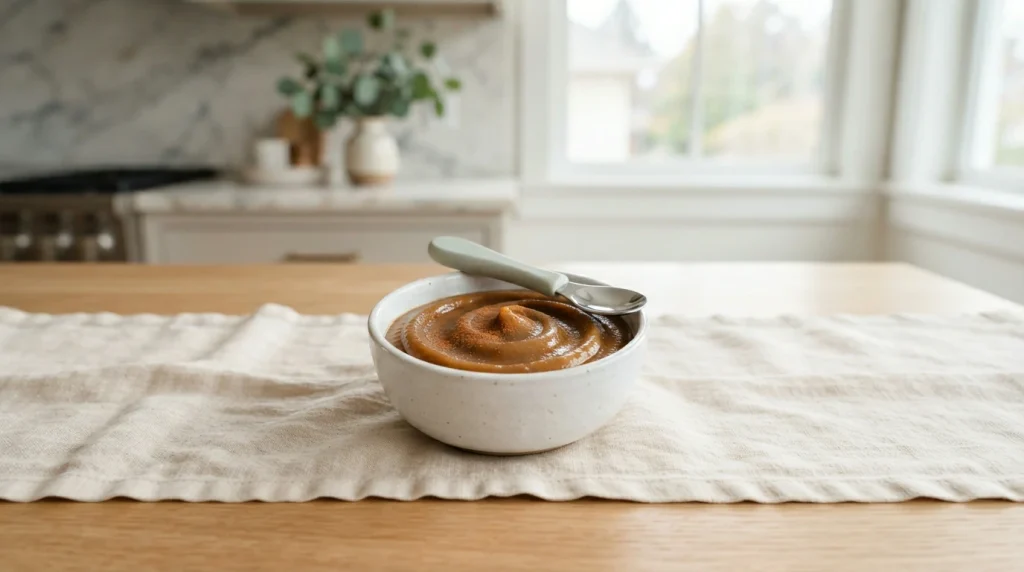
Babies don’t need dates, but they can eat them once solid foods are well established — the same “around six months” milestone that applies to most soft fruits. At that stage, serve dates as a purée: soak pitted Medjool in warm water, blend smooth, and offer it like any other fruit purée. Keep it as one food among many rather than a daily routine, one small spoonful at a time.
From around nine to twelve months, once soft finger foods are familiar, a whole well-pitted date is still too much to hand over. Cut it lengthwise into slender strips and offer those as a finger food instead, keeping pieces thin enough that a single bite stays manageable.
After the first birthday: cuts that prevent choking
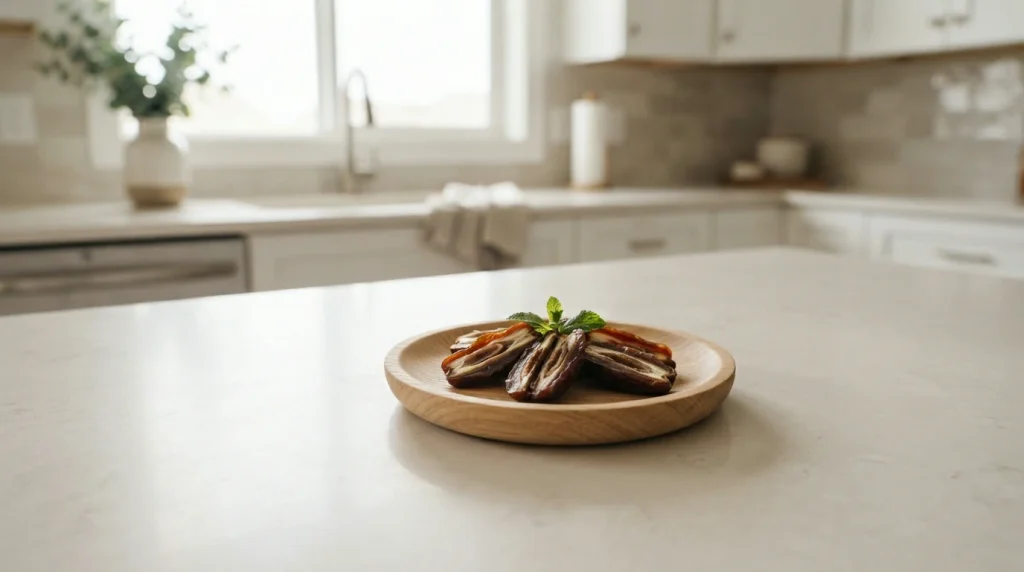
From twelve months onward, most children chew reliably enough for properly cut dates. The safest shapes are lengthwise strips or thin halves — never a whole date, and never chunky quarters of a large Medjool, which sit in the throat like a plug.
Three rules cover nearly all the real-world risk: pit removed, cut lengthwise, and eaten seated. A child who runs, lies down, or talks loudly while eating a date is eating under the one condition that makes every other precaution moot.
The choking rules, stated plainly
Dates are dense, sticky, and just about the right size to matter if something goes wrong. That is not a reason to avoid them, it is a reason to serve them deliberately. The AAP’s guidance on choking-risk foods is consistent across pediatric bodies: anything round, firm, and small needs to be cut for children under four, and dates fall in that category when served whole.
- Always remove the pit before serving.
- Cut lengthwise, not crosswise — flat strips are safer than round coins.
- Supervise meal and snack time; the “seen, seated, focused” rule covers more than size.
- Skip dates entirely for children with known swallowing or chewing delays unless a clinician says otherwise.
What dates actually contribute for kids
Nutritionally, a serving of two medium dates delivers fiber, potassium, magnesium, and a little iron along with its natural sugar — a noticeably better package than a fruit-flavored bar with the same calories. For a child who runs on very little between meals, a couple of dates plus a handful of almonds or a cheese stick make a balanced, high-satisfaction snack.
The honest counterpoint: dates are still a concentrated source of sugar. One or two dates is a serving; a bottomless bowl is dessert, and the stickiness makes them harder on teeth than most fruit. Pair dates with water after eating, and treat them as the sweet they are rather than a free pass.
Best varieties for kids
Soft, naturally sweet varieties are the easiest for young children to chew, which makes Medjool the default in most parenting kitchens — its caramel softness needs very little chewing effort. Halawi is a gentler option for kids who find Medjool too rich, with a milder, honeyed sweetness that melts quickly. Firm Deglet Noor suits older school-age children and the budget-conscious lunchbox, and anything soft enough to blend stays in play for smooth purées.
Packing dates for school
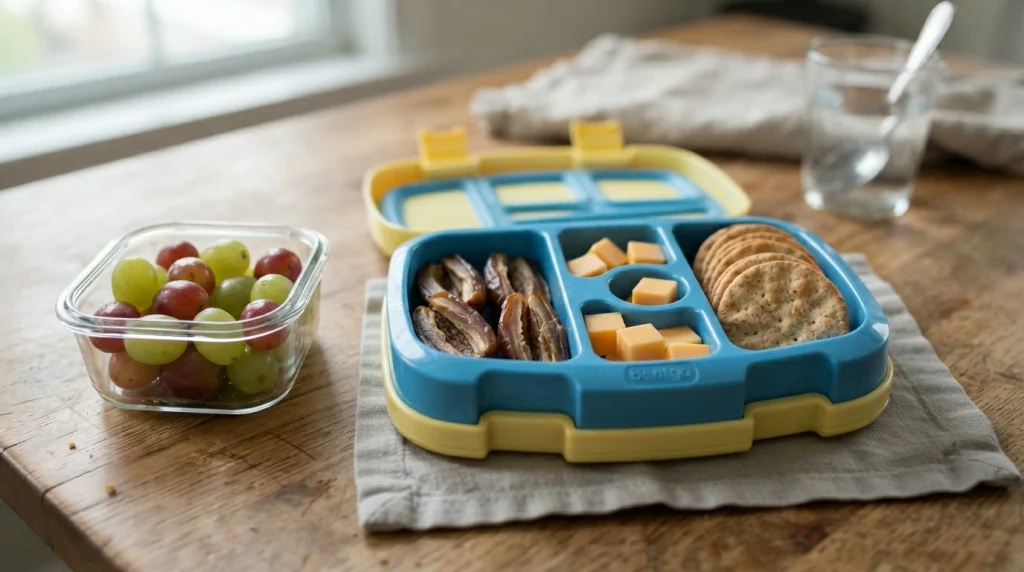
A lunchbox is where dates shine. Two lengthwise-cut dates take up almost no space, survive hours without refrigeration, and travel better than a bruised apple or a yogurt tube. For older kids who chew reliably, whole pitted dates are fine — but the lengthwise-cut habit is worth keeping for anyone under four. If you bake your own lunchbox bars, the best dates for cooking guide covers which purées hold shape best.
If the school has a no-nut or no-sticky-snacks policy, check the classroom rules first — some settings restrict sticky foods for younger rooms. Packing dates as part of a balanced box, with a protein and a fruit or vegetable, keeps them a snack rather than the whole show.
FAQ
At what age can kids eat dates?
Babies can have well-blended date purée once solids are established, usually around six months. Lengthwise-cut strips work as finger food from roughly nine months, and whole pitted dates are reasonable only once chewing is reliable — typically after the first birthday, and most safely still cut until age four.
Are dates a choking hazard for kids?
They can be, and the risk is real rather than theoretical: dates are dense, sticky, and round in their natural shape. Removing the pit, cutting lengthwise, and making sure a child is seated and supervised removes most of that risk, which is the same treatment pediatric guidance gives to grapes, hot dogs, and hard candy.
How many dates can kids eat in a day?
A sensible serving for a child is one or two dates, treating them like the concentrated sweet food they are rather than an unlimited fruit. Two dates plus a protein make a balanced snack; more than that starts to crowd out the rest of a small appetite.
Sources: USDA Food and Nutrition Service and AAP HealthyChildren.org, on introducing solids and reducing choking risk in young children